Our starting point
A short, practical first approach
Enchiridion
In a few pages, it sets out the central distinction between what depends on us and what does not.
- Level
- Accessible
- Reading time
- 1–2 hours
- Formats to compare
- Print · Ebook · Audio
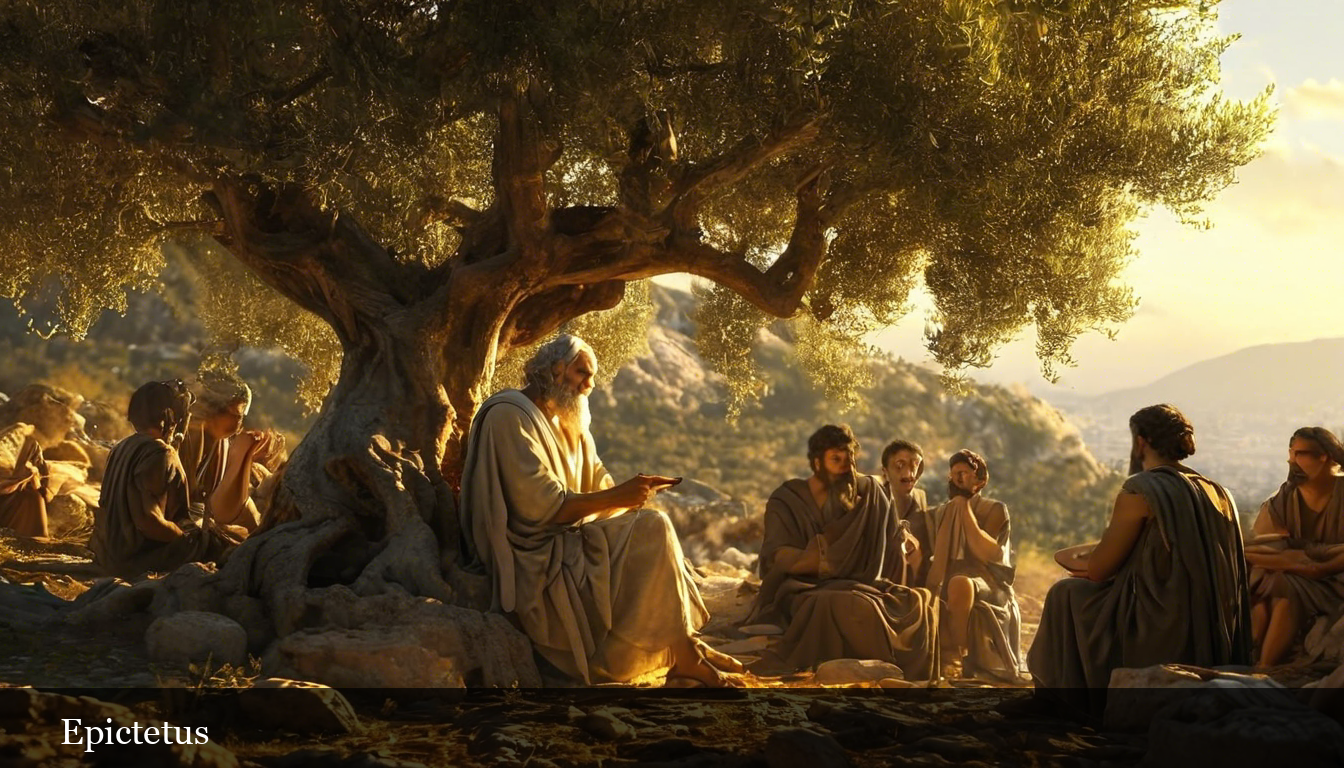
Greek Stoic philosopher, born a slave, active in the 1st and 2nd centuries AD
38 quotes in the MindQuotes library.
Reading guide
Epictetus is especially useful when you want a usable philosophy: start with the short text, then move to the conversations.
Our starting point
A short, practical first approach
In a few pages, it sets out the central distinction between what depends on us and what does not.
Going beyond maxims
The dialogues give substance to his thought and show how it responds to everyday problems.
Merchant links help compare editions. Recommendations are editorially independent.
“First say to yourself what you would be, then do what you have to do.”Create visual
“The greater the difficulty the more glory in surmounting it. Skillful pilots gain their reputation from storms and tempests.”Create visual
“It is not things themselves that disturb men, but their judgments about these things.”Create visual
“Some things are in our control and others not. Things in our control are opinion, pursuit, desire, aversion, and, in a word, whatever are our own actions. Things not in our control are body, property, reputation, command, and, in one word, whatever are not our own actions.”Create visual
“Wealth consists not in having great possessions, but in having few wants.”Create visual
“Make the best use of what is in your power, and take the rest as it happens.”Create visual
“He is a wise man who does not grieve for the things which he has not, but rejoices for those which he has.”Create visual
“Freedom is the only worthy goal in life. It is won by disregarding things that lie beyond our control.”Create visual
“First say to yourself what you would be; and then do what you have to do.”Create visual
“Seek not that the things which happen should happen as you wish; but wish the things which happen to be as they are, and you will have a tranquil flow of life.”Create visual
“The key is to keep company only with people who uplift you, whose presence calls forth your best.”Create visual
“It is impossible to begin to learn that which one thinks one already knows.”Create visual
“If anyone tells you that a certain person speaks ill of you, do not make excuses about what is said of you, but answer: 'He was ignorant of my other faults, else he would not have mentioned these alone.'”Create visual
“It is not he who reviles you who hurts you, but your opinion that you are being hurt.”Create visual
“Do not seek to have events happen as you want them to, but instead want them to happen as they do happen, and your life will go well.”Create visual
“Man is not worried by real problems so much as by his imagined anxieties about real problems.”Create visual
“Wealth is not the good; poverty is not the evil; to be well or ill is another thing.”Create visual
“If you want to be happy, do not dwell on the past, do not worry about the future, focus on living fully in the present.”Create visual
“It is not death or pain that is to be dreaded, but the fear of pain or death.”Create visual
“Don't demand that things happen as you wish, but wish that they happen as they do happen, and you will go on well.”Create visual
“We have two ears and one mouth so that we can listen twice as much as we speak.”Create visual
“If you seek truth, you will not seek to gain a victory by every possible means; and when you have found truth, you need not fear being defeated.”Create visual
“Wealth is the parent of luxury and indolence, and poverty of meanness and viciousness, and both of discontent.”Create visual
“Any person capable of angering you becomes your master; he can anger you only when you permit yourself to be disturbed by him.”Create visual