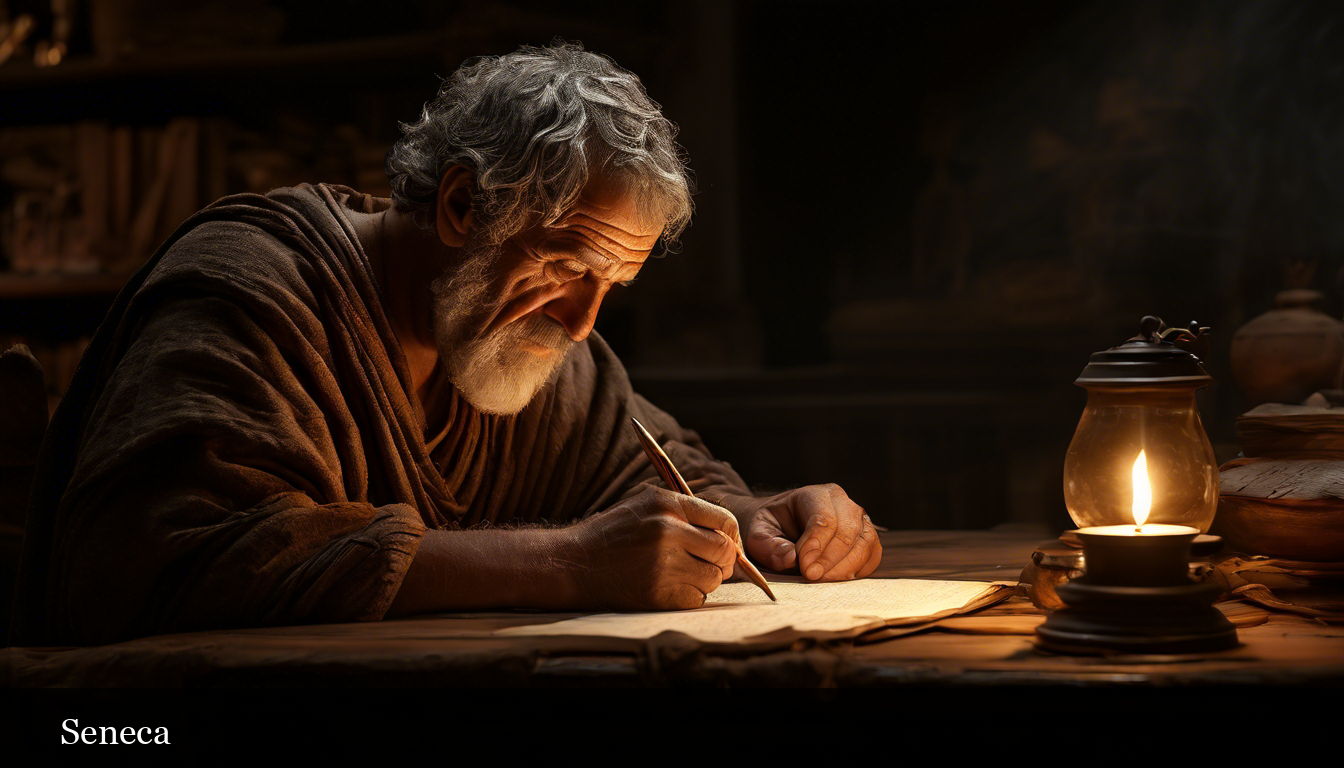
About
Seneca (Lucius Annaeus Seneca), born c. 4 BCE in Corduba (Córdoba) and died in 65 CE, is a major figure of Roman Stoicism. Son of the rhetorician Seneca the Elder, he was educated in Rome, studying philosophy under Attalus and Sotion. After a turbulent political career, he was exiled to Corsica by Claudius in 41 CE, then recalled in 49 CE by Agrippina to become tutor to Nero. With the praetorian prefect Burrus, he effectively governed the empire during the early years of Nero's reign. Accused of complicity in the Pisonian conspiracy, he was forced to commit suicide in 65 CE. His philosophical work, focused on practical ethics, includes the Letters to Lucilius and treatises such as On the Shortness of Life.
Major works
- Epistulae Morales ad Lucilium (c. 62-65)Philosophical letters
- De brevitate vitae (c. 49)Moral treatise
- De ira (c. 41)Moral treatise
- Naturales Quaestiones (c. 62)Natural philosophy treatise
- Medea (c. 50)Tragedy
Key milestones
- 41Exiled to Corsica by Emperor Claudius.
- 49Recalled by Agrippina to become tutor to Nero.
- 65Forced to commit suicide after the Pisonian conspiracy.
Themes
StoicismPractical ethicsThe shortness of lifeAngerClemency
Sources: plato.stanford.edu · iep.utm.edu · oxfordbibliographies.com